Evolution of the Piano: Classical to Digital
Classical to Digital: The Evolution of the Piano
As I think back on my life playing piano, I have never had a grand piano. While I have played a Grand Piano in lessons and at music stores, I have only owned a Keyboard. I have always relied on a digital piano (Keyboard) because my house is not big enough for a grand piano. The reason I decided to choose the evolution of classic to digital piano is I would never of had the chance to learn and grow on piano. Piano is such a huge part in my musical journey and one of my favorite instruments to play. The digital piano did not only give me the change to learn to play, it also gives so many others the opportunity to play as it is much cheaper and smaller to store.
Creation of the Classical Piano
The first Classical Piano came out the year of 1720 by Bartolomeo Cristofori. While he built it in Florence Italy and used the term "Acpicimbalo" which translates to "harpsichord with soft and load". Cristofori was very annoyed with the harpsichord as he was not able to control the volume of each note. He ended up switching the plucking mechanism out with a hammer. This gave the musician more control over the volume.
Video is showing the Piano Bartolomeo Cristofori built.
Classical Piano
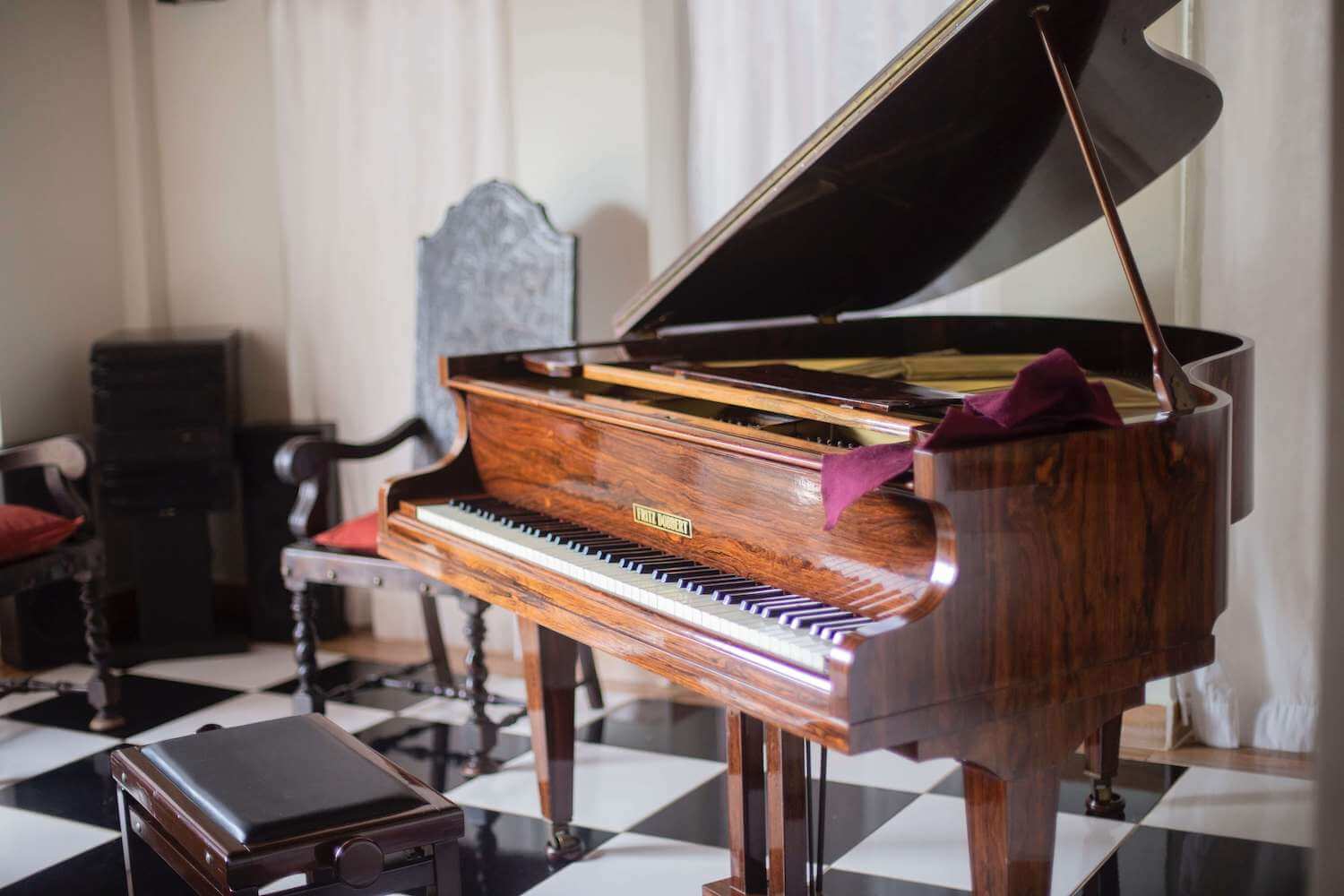
After the Piano was created, throughout many centuries many musicians messed with the piano to improve the instrument overall. The musicians would change structural and mechanical parts of the piano to make it louder, softer, or expressive. During each century pianos were used to fit the time period. For example during the Romantic Era, the piano needed to be able to express the music with power and volume. They added an expanded range and felt hammers to created a clear, rich sound. Also as the years went on in the 19th century they were able to shrink the Classic Piano smaller, this made it possible to have pianos not only in wealthy households, middle class were also able to have one in their house.
Digital Piano
Digital Pianos were created throughout the 1970's-1980's, the first Digital Piano that came out was a Yamaha CP-70. The news of Digital Pianos did not go around fast as the first Digital Piano was expensive. They became very popular when musicians started using them on tour and music videos. The reason the Digital Piano became so popular was that as time went on and in the 1990's they became very affordable. This opened the door to many who wanted to play piano. Also you are able to wear headphones when playing piano. Now Digital Pianos are more popular than Classic Pianos.
Sound difference between Classical Piano and Digital Piano
Classical Pianos has an acoustic sound that you cannot get with a Digital Piano. The feeling you also feel when you get to sit down at a Grand Piano and play is so soothing. As Lang Lang played Bubbly Bulan on a Grand Piano you can hear the inharmonicity. Inharmonicity is the stiffness of the piano strings which causes partials to stretch which does not happen on Digital Pianos. This is unique as it brings songs played on a Classical Piano more depth and a natural acoustic sound. Also Lang Lang uses Pedal complexity throughout the entire song. Pedal complexity does not work well on Digital Pianos, while Classical Pianos has a sustain pedal you can "half-pedal" where you only push down the pedal halfway for partial dampening. Another difference with the pedaling on Classical Pianos and used during Yang Yang song is the sostenuto pedal, the key the pianist is holding while pushing the pedal will dampen only that key. This is not an option on Digital Pianos. Classic Piano
While Digital Pianos can closely follow a Classical Piano, they lack the organic, acoustic, and depth a Classical Piano has. Digital Pianos use sound sampling and modeling to create the sound of a Classical Piano. As I listened to Johann Pachelbel Cannon in D by Jacob Piano. While the song was played beautifully, I did not get the acoustic sound I got from Lang Lang playing Bubbly Bulan. I feel that I did not get pulled to the song as I did to Lang Langs even though it was played very similarly in skill level. The Pedal Complexity also was not as noticeably, the sound did not go from Piano and Forte as quick or got as loud. Digital Piano
Conclusion
While I love both Classical and Digital Pianos, I play a Digital Camera at home while I only have access to a Classical one during lessons. Digital Pianos are more affordable and smaller while a Classical Piano brings that acoustic, eye moving sound. I love both as there different, but while I am listening to music that is mainly piano I prefer to listen to it on the Classical Piano as I think it sounds better.
Work Cited
Kirova, Daniela, and About Daniela KirovaDaniela is a writer. “Stay Calm: How Values Change When You Are Stressed.” Values Institute, 26 Feb. 2023, values.institute/stay-calm-how-values-change-when-you-are-stressed/.
Groves, Olivia. “The Evolution of the Modern Piano (Facts, Photos and Timeline): Blog: Lindeblad Piano.” Lindebladpiano, www.lindebladpiano.com/blog/history-of-the-piano#:~:text=The%20introduction%20of%20an%20upright,the%20face%20of%20the%20player. Accessed 14 Oct. 2025.
Leggitt, Bob. “What Was the First Digital Piano?” Planet Botch, planetbotch.blogspot.com/2014/10/what-was-first-digital-piano.html. Accessed 14 Oct. 2025.
Corporation, Roland. “History of Roland Digital Piano.” Roland, www.roland.com/global/promos/piano_design_awards/history/#:~:text=’73,quickly%20became%20a%20mainstream%20trend. Accessed 14 Oct. 2025.
Your essay does a great job connecting your personal experience with the broader history of the piano. You clearly explain how Cristofori’s invention made music more expressive and how digital pianos opened access for more people to learn and play. I like how you compared the sound and feel of both instruments, especially noting inharmonicity and pedal complexity. Overall, it’s a thoughtful reflection that shows both your understanding of the piano’s evolution and your personal passion for the instrument.
ReplyDeleteHello Gabby, I enoyed hearing your explanation in the difference of sound between the classical piano and the digital piano. It was very interesting to learn about inharmonicity and the way that it effects the sound of the music. I did not learn how to plan piano but I was able to learn a few simple songs and I agree that playing the piano can be soothing and comforting.
ReplyDelete